Table Of Content

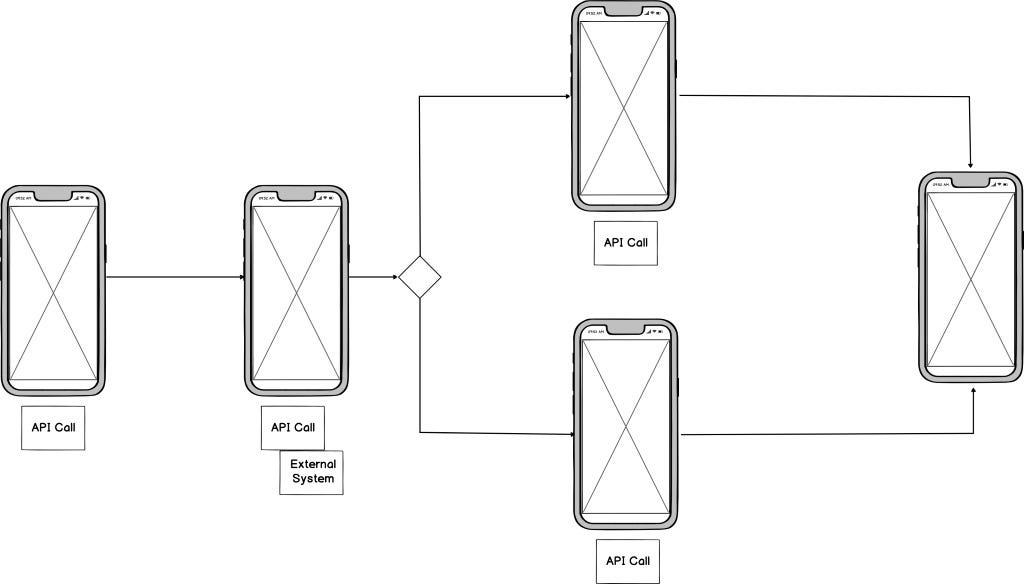
The technical team can get a bigger picture of the feature and start thinking of the implementation. From a business team standpoint, they can get a functional diagram that explains how the requirement will be built. When we can get all team to understand the big picture we can collect the feedback faster on how complex the feature will be and of course how long it will take. This documentation and process will remove the missing links and can get all the team on board with the same goal; collaboration from each team require to produce a quality and faster implementation. After creating the System Diagram, we can continue work on the High-Level Design.
Mastering Non-Functional Requirements: The Key to Successful Software Architecture
We are the 2022 award-winning company for UX/UI Design, Custom Software and Web Development services. This section details any Architecture and Design Impacts arising from Testing, in particular for the environments considered for testing and the test software. This section clearly indicates to the Test Teams Environment considerations. It is important to establish a framework and process for a quality design deliverable.
1 What Is a High-Level Design (HLD) Document
Conducting stakeholder interviews, reviewing documentation, and brainstorming sessions can help gather the necessary information. The High-Level Design documentation presents the structure of the system as the application/database architecture, application flow, and technology architecture. High-Level Design documentation may use some non-technical terms, unlike low-level design which should be strictly technical jargon. In software development, low-level design (LLD) and detailed design (DD) refers to similar but slightly different stages in the design process.
Scope of HLD
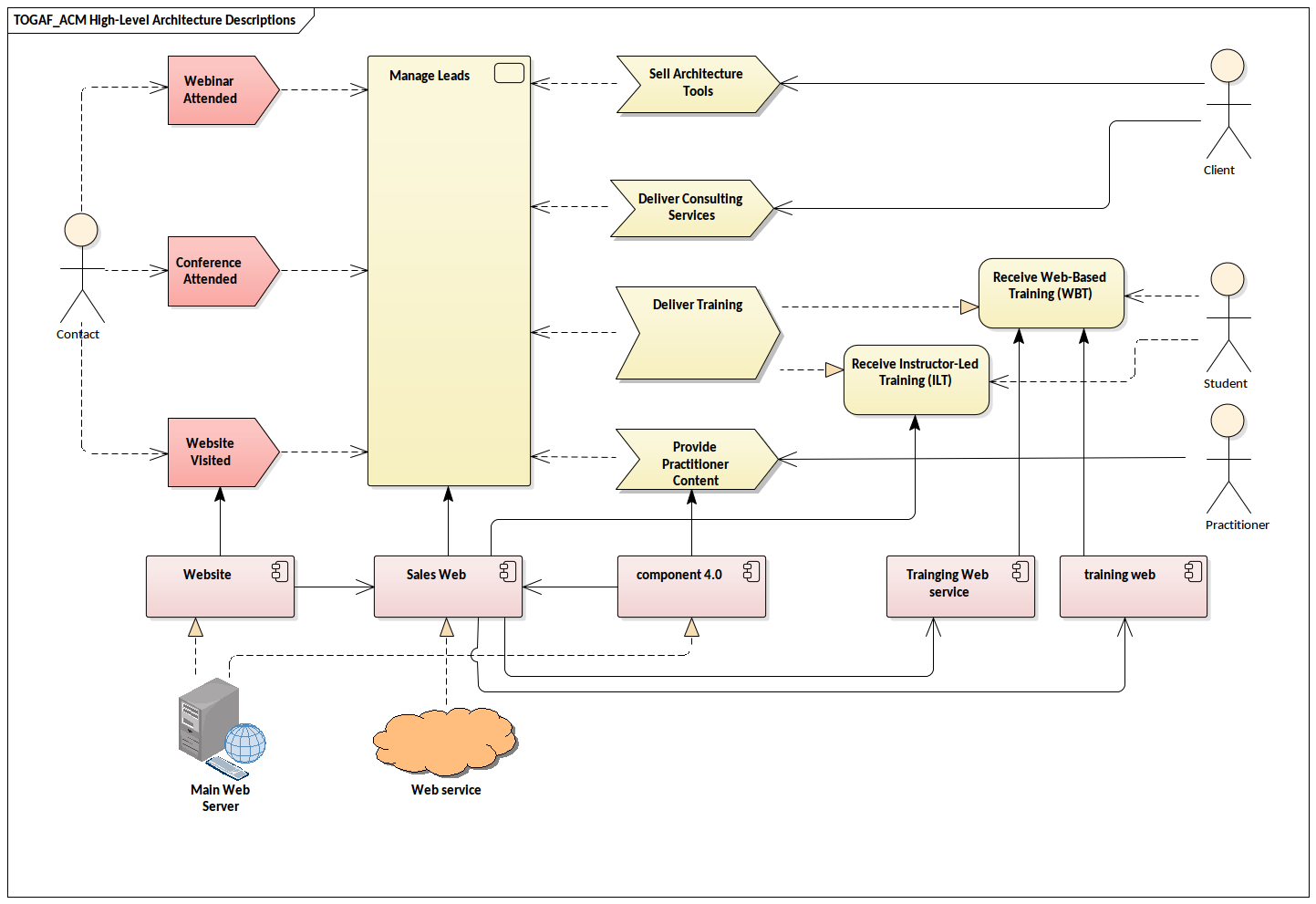
A diagram representing each design aspect is included in the HLD (which is based on business requirements and anticipated results). This section establishes the Data Impacts and helps seek the approval of Information Asset Owners, Information Governance and Security Teams. Visualizations are powerful tools that help reduce the cognitive load and channel complex ideas in a more digestible manner. Architectural, process flow and network diagrams are always welcomed in architectural documents.
A Comprehensive Understanding of Testing Reports in Software Development
This section provides a 360° coverage of the solution for each Application and establish the boundaries of delivery for the Application Owners, Application Delivery & Application Support teams. At this stage, the nitty-gritty details of the implementation are not required. What is needed is a mapping between the high-level design decisions and the solution’s essential requirements. Filtering, as the name suggests we are filtering specific desired data from the database on basis of requirements such as geographical factors.
Benefits and Advantages of Creating a High-Level Design
There will be a lengthy discussion across the team before and after creating the solution. But the main point here is to get the answer first on how we will complete the requirement. We also put all the possible API (Application Programming interface), data flow, and external system integration. To create this diagram, we need to align the requirement and the design screen. Don’t forget to include all the decisions and logic between each flow. For High-Level Design, we only create a positive flow, or usually, we call this happy flow.
Introduction to Interfaces in System Design
When i am including this sr_def_param.vh in radio_config.v using `include "sr_def_param" and placing the sr_def_param.vh file in the same directory of where radio_config.v is placed, i am getting quartus compilation error. But when i am opening radio_config.ip and then doing analyze hdl file , there is no error. 95% of our clients either come back to us with more projects or recommend us to their business friends.
Denormalization Process in System Design
The Payment Gateway LLD would focus on integrating with a secure payment provider and handling various payment scenarios, including error handling and transaction reconciliation. HLD briefly describes about the platforms/products/services/processes, flow of traffic that it depends on and includes any important changes that need to be made to them. HLD is the input for creating the LLD (Low Level Design) since the key communication items are displayed in HLD which are then converted to detailed communication in LLD, showing connectivity and physical level. HLD requires contribution from a number of experts, representing many distinct professional disciplines like SME, Design Architectures. Every type of end-user should be classified and identified in the HLD and each contributing design should give due consideration to the customer experience. Another important aspect is that HLD and LLD are source of reference in Operations stage also, after the project has been successfully implemented and now in BAU stage.
Understanding High-Level Design
This involves designing the software’s architecture, components, modules, interfaces, and data structures. These kinds of documents provide a framework and guidance for driving the more detailed design and implementation of a feature/system. It’s not normally going to contain full database schema definitions or class definitions. I actually generally avoid writing up design documents at that level of detail because the details change so rapidly. I generally strive to have a document that can stand the test of time over six months to a year before it veers too far off course. A High-Level Design document is a technical document that outlines the overall architecture and design of a software system at a high level.
Looking for entry-level and junior-level design positions? Check out these job opportunities on Archinect Jobs - Archinect
Looking for entry-level and junior-level design positions? Check out these job opportunities on Archinect Jobs.
Posted: Thu, 20 Jul 2023 07:00:00 GMT [source]
Design process of modern IT systems and large software integration projects. The domain model is going to evolve as more use cases are uncovered, or as the dev team tries to implement it and realizes that it may look good on paper but doesn’t actually make sense when you try to get it to actually work. Have ongoing conversations with the product owner and keep updating the model as needed. You try as much as possible to use the terms commonly used by domain experts, rather than invent your own terms. As a counter-example, when we built a system to define insurance plans, we came up with the term “insurance plan boundary” to indicate a limit such as your deductible or annual maximum out of pocket.
HLD does not include physical requirements, port details, VLAN, and many other details. Today, most high-level designs require contributions from a number of experts, representing many distinct professional disciplines. In both cases, the high-level design should be a complete view of the entire system, breaking it down into smaller parts that are more easily understood. To minimize the maintenance overhead as construction proceeds and the lower-level design is done, it is best that the high-level design is elaborated only to the degree needed to satisfy these needs. Ninety-seven percent of undergraduates and 96% of graduate students developed an actionable plan to launch a functional game after graduation. Intel does not verify all solutions, including but not limited to any file transfers that may appear in this community.
An HLD is usually prepared at the early stages of a software project, typically during the Analysis phase of the SDLC. Professionals espousing Agile values consider extensive documentation an effort-intensive, low-value activity and overhead that can be abandoned without risk. That may be true for small projects or standard, off-the-shelf offerings. You will likely notice that as you try to exercise the scenarios, you find problems with the domain or the components. Go back and tweak things, bringing questions back to the product owner or other experts as needed.
This section establish a common understanding of the technical solution for stakeholders including Business, Technology and Suppliers’ teams. The first step in developing a high-level design is to gather the system requirements and functional specifications. This involves understanding the goals of the system, the intended audience, and the desired functionalities.
To start a solution design, you should first understand the problem and its context, then identify the business goals and user requirements. After that, you should define the system architecture and design, identify the software modules and components, specify the interfaces and data flows, and test and validate the design before deployment. A solution design diagram is a visual representation of the software system that shows the modules and components, their interactions and dependencies, the data flows, and the interfaces between the system and its environment. These diagrams help communicate the design to stakeholders and ensure a common understanding of the system. High-level design (HLD) explains the architecture that would be used to develop a system. In contrast, low-level design further exposes the logical detailed design of each of these elements for use by engineers and programmers.
This topic provides you with the details to filter and sort the results of API requests and also guides you to handling the pagination of large result sets returned from an API request. In a client-server architecture, we are sending a request to server and server sends it back and so in this way communication takes place. But in designing the system biggest problem we face is whether we can implement the client-server model because we can not wait until the server responds. Twitter which is recently in newsfeeds these days, here at high-level designing we need to make sure tweets of popular influencers are reaching out to millions of people so how we need to scale our system so service should not be hampered. Capacity estimation in system design involves predicting the resources (such as processing power, memory, and bandwidth) required to meet the expected workload. It ensures that a system can handle current and future demands efficiently, helping in the proper allocation of resources and preventing performance bottlenecks.
Although creating a High-Level Design is not a one-time process, you need to iterate the process over and over again through many cases and scenarios. Because you want this as a foundation of the feature or application, you want to build. Even you can use High-Level Design to communicate with management on how the solution will be. In the end, all member from the business team or technical team can go back to this to see the solution, how the feature work, what do we need, and what the goals of the feature or application. This section establishes the Integration and Interface Impacts, and for each Interface, establish the boundaries of delivery. This section details the changes/impacts to each Application or element of the Application.


No comments:
Post a Comment